Microbes, metals and microplastics in water: how should priorities be set?
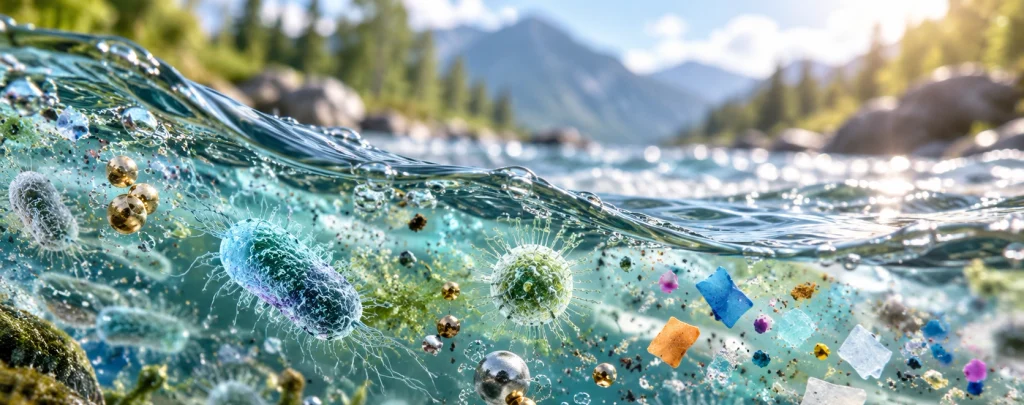
Detecting a substance in water begins a risk assessment. It does not complete one. Microorganisms, dissolved chemicals and microplastics require different methods of investigation, different interpretations of exposure and different public health responses. A credible research agenda must distinguish what is known, what remains uncertain and which findings should influence immediate decisions.
Introduction
Water pollution presents a complex challenge because the term covers several scientifically distinct problems. A drinking-water source may contain disease-causing microorganisms, naturally occurring arsenic, agricultural chemicals, industrial residues or synthetic plastic particles. Although these substances are frequently discussed together, their health consequences, environmental behaviour and appropriate methods of assessment differ considerably. The identification of a contaminant in a sample establishes its presence at a particular place and time, provided the analytical method is reliable. It does not automatically establish the degree of human exposure, the likelihood of disease or the scale of environmental damage. Effective policy must therefore begin with a clear distinction between contamination, exposure, health risk and demonstrated harm.
The established global burden of unsafe drinking water illustrates why this distinction matters. The World Health Organization reported that at least 1.7 billion people used drinking-water sources contaminated with faeces in 2022. It also estimated that microbiologically contaminated drinking water causes approximately 505,000 diarrhoeal deaths annually. These figures concern a recognised public health hazard supported by extensive epidemiological and microbiological evidence. The same level of certainty cannot presently be assigned to every emerging pollutant that laboratory instruments can detect. The appropriate response is neither to dismiss newer concerns nor to treat all detected substances as equally dangerous. Instead, scientific priority should reflect evidence of exposure, potential severity, uncertainty and the feasibility of intervention. [1]
India illustrates the need for such a differentiated approach. Groundwater supports drinking-water supply, agricultural production and numerous economic activities, while rivers receive pressures from settlements, agriculture, industry and changing land use. The Central Ground Water Board publishes national assessments that identify chemical concerns such as nitrate, fluoride, arsenic and uranium. Meanwhile, academic researchers are investigating microplastics in the Ganga and other inland aquatic environments. These investigations provide valuable but different forms of evidence. A national monitoring report may establish the geographical distribution of selected chemical exceedances, whereas a river microplastic study may demonstrate particle occurrence under a particular sampling protocol. Their results should not be interpreted as equivalent indicators of disease burden. [5] [6] [9]
An additional problem concerns the relationship between research and decision-making. Laboratories increasingly possess instruments capable of detecting substances at very low concentrations, but analytical sensitivity may advance faster than toxicological knowledge or institutional capacity. A scientifically correct detection result can therefore generate an exaggerated interpretation if its uncertainty, sampling design and health relevance are not communicated. Conversely, poor monitoring may conceal genuine hazards affecting vulnerable communities. The central objective of responsible environmental research is to establish which conclusions the evidence supports and which corrective measures are justified. For India, this requires coordination between public health authorities, water suppliers, environmental regulators, research institutions and the communities using the water.
Understanding Hazard, Exposure and Risk
A hazard is an agent or condition capable of causing harm. Exposure occurs when a person, animal or ecological system comes into contact with that hazard. Risk concerns the likelihood and severity of an adverse outcome under specified exposure conditions. These concepts are closely related but cannot be substituted for one another. Arsenic is hazardous because certain forms and exposure levels are associated with serious health effects. However, an arsenic concentration measured in a distant aquifer does not establish exposure for a household that uses a different source. Similarly, detecting plastic particles in river sediment does not prove that those particles have entered drinking water, food or human tissues at biologically consequential concentrations. Sound analysis therefore follows the pathway from source to receptor.
The nature of exposure is particularly important. Microbial contamination can cause acute illness following a relatively short period of exposure, whereas many chemical hazards become significant through long-term consumption. The total dose may depend on concentration, volume consumed, frequency, duration, body weight and individual susceptibility. Children, pregnant women, older persons and individuals with particular health conditions may not face identical risks. Environmental exposure also differs from human exposure because organisms in aquatic ecosystems encounter contaminants through water, sediment and food webs. A study designed to assess fish health may therefore require different measurements from one intended to establish whether a village drinking-water system is safe.
The intended use of water determines the relevant standard. Drinking-water quality, irrigation suitability, industrial process requirements and ecological quality are distinct regulatory or scientific categories. A groundwater sample might satisfy a measure used for irrigation and still contain a drinking-water contaminant above an applicable limit. The Central Ground Water Board evaluates irrigation-related properties, including salinity and sodium-related indicators, alongside drinking-water parameters. Researchers must identify the appropriate benchmark and explain whether it is a health-based guideline, a statutory specification, an operational target or an exploratory research threshold. Failure to state these differences can produce apparently contradictory conclusions about the same water source. [5] [6]
A laboratory result answers the question of what was measured in a particular sample. An exposure assessment investigates whether and how that substance reaches people. A risk assessment evaluates the possible consequences under defined exposure conditions. A health-impact study investigates actual outcomes in a population. These are four related but separate forms of evidence.
Scientific uncertainty also deserves careful treatment. It may originate in the sampling design, laboratory instrument, statistical model, exposure assumptions or incomplete knowledge of biological mechanisms. Not all uncertainty has the same policy significance. If a pathogen is identified in drinking water, immediate protection may be necessary even when the exact number of exposed households remains unknown. By contrast, the detection of a poorly characterised emerging contaminant may justify additional testing before any specific health claim is made. This distinction supports a precautionary approach proportionate to the potential harm without abandoning the requirement for transparent evidence.
What the Evidence Shows
Water contaminants should be evaluated according to the maturity and relevance of the available evidence. For faecal microbial contamination, substantial scientific evidence connects unsafe water with infectious disease. For chemicals such as arsenic and fluoride, established toxicological and epidemiological findings support health-based guidance. For microplastics, environmental occurrence is well documented in numerous settings, but questions remain regarding the magnitude of human exposure, particle characteristics and consequences of environmentally relevant concentrations. These differences do not imply that emerging pollutants are harmless. They mean that scientific conclusions must reflect different levels of certainty rather than relying on public attention or the novelty of the substance.
| Hazard group | Evidence status | Principal concern | Research priority |
|---|---|---|---|
| Faecal microorganisms | Established | Acute infectious disease and drinking-water safety. | Source protection, treatment reliability and microbial surveillance. |
| Arsenic and fluoride | Established | Chronic effects associated with excessive exposure. | Mapping affected sources, exposure assessment and safe alternatives. |
| Nitrate and uranium | Context dependent | Concentration, duration of exposure and contaminant-specific toxicology. | Reliable monitoring, hydrogeological explanation and exposure reduction. |
| Microplastics | Important uncertainty | Particle occurrence, exposure and incompletely characterised health effects. | Standardised methods, smaller-particle detection and toxicological research. |
The World Health Organization’s 2026 drinking-water guidelines reinforce the importance of preventive management, surveillance and context-sensitive risk prioritisation. Their emphasis on water safety planning and sanitary inspections is significant because laboratory testing alone cannot guarantee a continuously safe supply. A water system may meet a standard during routine sampling and experience contamination following a pipe failure or extreme rainfall. Consequently, evidence should include both measurements and information about the system’s ability to control hazards. The relevant question is not merely whether a sample passed a test, but whether the source, treatment, distribution and storage arrangements consistently prevent exposure. [2]
Microbial Contamination
Microbial contamination remains among the most immediate water-related public health concerns. Human and animal waste can introduce pathogenic bacteria, viruses and protozoa into drinking-water sources. Unsafe sanitation, leaking pipelines, poorly protected wells, contaminated storage vessels and inadequate disinfection create opportunities for transmission. The WHO identifies diarrhoea, cholera, dysentery, typhoid and polio among diseases that may be transmitted through microbiologically contaminated drinking water. The risk is particularly serious where water services are intermittent, sanitation infrastructure is weak or emergency conditions interrupt treatment. Preventive management must therefore address the entire water supply chain rather than relying exclusively on a test taken at the treatment plant. [1]
A central methodological issue is the interpretation of indicator organisms. Testing for organisms such as Escherichia coli provides information about faecal contamination but does not necessarily identify every pathogen present. The absence of a particular indicator in one sample should not be interpreted as proof that the supply will remain safe throughout the following week. Microbial conditions can change rapidly with rainfall, changes in source water, pipe pressure or storage practices. Sampling schedules should therefore consider seasonal variation and operational events. In higher-risk systems, repeated observations and sanitary inspections may provide a more dependable basis for action than an isolated negative result.
The WHO’s 2024 guidance for small drinking-water supplies recommends an approach combining appropriate standards, proactive risk management and independent surveillance. Its sanitary inspection packages provide practical methods for identifying defects that may permit contamination. These principles are relevant to Indian villages and smaller settlements because a community water scheme may have limited technical staff, irregular maintenance capacity or unreliable monitoring arrangements. Community participation is useful, but it cannot replace professional laboratory support where confirmatory analysis is necessary. The important institutional objective is to establish a system that can identify failures promptly and ensure that evidence results in corrective measures. [3] [4]
Water that appears clear, has no unusual smell and tastes normal may still contain infectious organisms. Visual appearance is not an adequate measure of microbiological safety. Where a serious contamination event is suspected, immediate protective action should follow competent public health guidance while confirmatory testing and investigation proceed.
For university research, microbial water safety offers opportunities extending beyond pathogen detection. Investigators can examine contamination during intermittent supply, the effect of household storage, the frequency of sanitary defects and the relationship between rainfall and positive microbial tests. Such research becomes more valuable when paired with transparent sampling records and operational information. It should also distinguish the prevalence of contamination from the incidence of illness. Establishing that several sources contain faecal indicators does not by itself measure the number of resulting disease cases, although it can establish a compelling basis for preventive intervention.
Metals and Chemical Hazards
Chemical contamination presents a different risk profile because concentrations may remain elevated for extended periods and health effects may develop gradually. Important contaminants include arsenic, fluoride, nitrate and uranium, together with locally relevant industrial or agricultural chemicals. Their occurrence depends on geology, groundwater chemistry, land use, pollution sources and water management practices. Some contaminants are primarily geogenic, meaning that they originate through natural interactions between water and geological materials. Others may enter aquifers through fertilisers, wastewater, industrial discharge or improper waste disposal. Successful investigation therefore requires both laboratory analysis and an understanding of the environmental processes responsible for contamination.
Arsenic and long-term exposure
Arsenic is particularly important in parts of the Indian subcontinent because contaminated groundwater can create prolonged exposure where households rely on affected wells. WHO identifies inorganic arsenic as a major chemical concern and maintains a provisional drinking-water guideline value of 10 micrograms per litre. Long-term exposure to inorganic arsenic is associated with significant adverse health effects, including certain cancers and skin lesions. The guideline is provisional partly because of practical difficulties in achieving low concentrations under all circumstances. WHO nevertheless recommends reducing concentrations as far as reasonably possible. A responsible public health programme should establish whether households actually consume water from affected sources and whether safer alternatives are available. [8]
Regional differences are essential to interpreting arsenic findings. A contaminated well cannot establish contamination throughout a district, and a safe sample from one depth cannot establish that all nearby aquifers are safe. Aquifer chemistry, depth, pumping history and groundwater movement may influence distribution. Researchers should therefore avoid making broad geographical claims from limited sampling. Where arsenic affects irrigation, additional assessment may be needed to understand accumulation in agricultural soils and possible transfer into food crops. However, the presence of arsenic in irrigation water alone is not enough to quantify dietary intake because soil characteristics, crop variety, irrigation practice and food preparation may all alter the exposure pathway.
Fluoride, nitrate and uranium
Excessive fluoride exposure through drinking water is associated with dental and, at higher sustained exposures, skeletal fluorosis. Nitrate contamination commonly warrants investigation of agricultural practices, wastewater and other nitrogen sources. Elevated nitrate is particularly relevant for infant health under circumstances associated with the development of methaemoglobinaemia. Uranium requires careful distinction between chemical toxicity and radiological concerns, with interpretation depending on exposure and the relevant health-based reference. These hazards should not be described as though they produce the same disease or arise from identical sources. Their monitoring requires contaminant-specific analytical methods, appropriate units and a clearly stated comparison standard. [2] [5]
The Central Ground Water Board’s Annual Ground Water Quality Reports for 2024 and 2025 provide important national institutional evidence about the distribution of groundwater-quality concerns. These reports should be read alongside their sampling methodology, monitoring coverage and parameter-specific results. A reported exceedance indicates that a particular measured sample crossed a specified benchmark. It is not automatically a direct estimate of population exposure or disease. Moreover, percentages obtained from monitored locations are not interchangeable with percentages of all wells, villages or households. National monitoring is valuable for identifying potential hotspots and informing further investigation, but local decisions require source-level confirmation. [5] [6]
When a report states that contamination occurs in a district, readers should determine whether this means one or more sampled locations exceeded a threshold, whether a substantial proportion of samples were affected or whether household exposure was independently measured. These three findings have different meanings. Only a sufficiently designed exposure assessment can support reliable statements about the population actually consuming contaminated water.
Microplastics and Scientific Uncertainty
Microplastics have become a prominent subject of environmental research because plastic materials undergo fragmentation and enter aquatic systems through multiple pathways. These particles may originate from larger plastic items, synthetic textiles, urban runoff, wastewater or other sources. Their characteristics vary by polymer type, size, shape and surface chemistry. Such variability creates substantial analytical difficulties because results from different laboratories may not be directly comparable. A study reporting hundreds of particles per unit volume may employ a different lower size threshold from another study reporting fewer particles. Without information about collection methods, particle identification and contamination control, a numerical comparison may be misleading.
The WHO’s 2019 assessment examined the occurrence of microplastics in drinking water, potential health effects and treatment-related removal. Its subsequent 2022 assessment considered exposure through food, water and air, reviewing available data published up to December 2021. These reports recognised significant limitations in the evidence concerning human health risks. They also emphasised the need for better methods to measure exposure and understand biological effects. The scientifically defensible conclusion is that environmental detection is established in many settings, while the magnitude and health relevance of particular human exposures require further investigation. Neither a general declaration of safety nor an unsupported assertion of widespread disease follows from the available evidence. [7] [10]
Evidence from the Ganga
Research in the lower Ganga provides an Indian example of systematic environmental detection. A peer-reviewed study by Nisha Singh and colleagues, published in Marine Pollution Bulletin in 2021, investigated water and sediment collected from five major cities along the river. It reported microplastic abundances of approximately 380 to 684 items per 1,000 cubic metres in water and 17 to 36 items per kilogram of dry sediment. The findings demonstrate microplastic occurrence at the investigated locations under the study’s sampling and measurement conditions. They do not establish that consumers receive an equivalent exposure through drinking water, nor do they independently demonstrate a specific human disease outcome. [9]
Studies of this kind also reveal why sediment deserves attention. Particles may remain suspended, settle temporarily, become incorporated into bed material or move downstream during altered flow conditions. Their movement may be influenced by particle density, river hydraulics, barriers and local sources. A water sample taken at one point cannot adequately describe the complete distribution of microplastics through a river system. Research should therefore consider hydrological conditions and whether the scientific question concerns transport, accumulation, ecological exposure or possible entry into water supplies.
Analytical limitations
Microplastic analysis is vulnerable to contamination introduced during field sampling and laboratory handling. Airborne fibres, plastic containers, clothing and filtration materials may contribute particles unless controls are carefully designed. Researchers should use procedural blanks, describe contamination-prevention measures and document analytical recovery. Visual identification alone can also misclassify natural fibres or other particles as plastics. Where resources permit, suitable spectroscopic methods can strengthen polymer identification. Detection limits must be reported because instruments capable of studying relatively large particles may miss smaller particles that are especially relevant to emerging exposure questions.
A particle count is not a direct measure of toxicity. Particle size, polymer composition, exposure route, duration, concentration and experimental conditions all influence interpretation. Health effects observed under experimental conditions should not be presented as established population effects unless the exposure circumstances and supporting evidence justify that conclusion.
These uncertainties do not weaken the general environmental case for reducing unnecessary plastic pollution. Waste prevention, improved collection systems and effective wastewater management can offer benefits independent of proving a particular microplastic-related human illness. The distinction matters because environmental protection may be justified through ecosystem impacts, resource conservation and broader pollution reduction even where specific health outcomes remain under investigation. Scientific communication should therefore distinguish the case for preventive environmental management from any stronger claim about the present burden of disease attributable to microplastics.
Rivers, Sediment and Food Pathways
Rivers are dynamic systems in which contaminants move through dissolved, suspended and deposited forms. The behaviour of a substance may vary with rainfall, sediment load, temperature, flow conditions and chemical composition. Microorganisms entering a river through sewage may respond differently to seasonal conditions from metals attached to suspended sediment or plastic particles transported by currents. Consequently, a sampling programme that measures only dissolved substances may fail to detect important particle-associated contamination. Similarly, an investigation restricted to dry-season conditions may not capture pollution events associated with monsoon runoff or flooding. An integrated understanding requires the selection of environmental media appropriate to the contaminant and research question.
River pollution assessments frequently use biochemical oxygen demand, commonly known as BOD, to evaluate organic pollution pressure. The Central Pollution Control Board has used BOD-related criteria in identifying polluted river stretches. Its reporting for the relevant assessment period identified 311 polluted stretches on 279 rivers using the applicable approach. This information is important for understanding oxygen-demanding pollution and the condition of monitored river locations. However, BOD is not a direct measurement of arsenic, microplastics or individual pathogens. A reduction in the number of BOD-classified polluted stretches should not be interpreted as proof that all categories of contamination have declined. [11]
Environmental transfer into agriculture
Agricultural irrigation creates another possible exposure pathway. Water containing certain chemicals may alter soil conditions through repeated application, and contaminants may accumulate, become immobilised or move into plants depending on their chemical properties and the surrounding environment. In parts of eastern India, research into arsenic is relevant because rice cultivation often involves prolonged contact between water and soil. Nevertheless, the presence of arsenic in irrigation water does not establish the amount present in harvested grain. That conclusion requires measurements from agricultural soil and edible plant material, together with relevant information about cultivation and consumption.
A rigorous food-pathway study would examine environmental contamination at each stage, beginning with the irrigation source and extending through soil, crops, food processing and consumption. It would distinguish concentration in water from accumulation in crops and distinguish crop contamination from actual dietary exposure. Investigators should also consider alternative sources of contamination and background environmental conditions. Such a design is more expensive than collecting water alone, but it is necessary when the research objective concerns food safety rather than simply water quality. The principle extends to aquatic organisms and fisheries, where sediment and food-web processes may influence exposure.
The full pathway approach improves decision-making because intervention may be possible at several points. Contamination can sometimes be reduced at its source, exposure can be interrupted through alternative water supplies, treatment may reduce concentrations and changes in agricultural practices may limit transfer into food. The most appropriate response depends on technical feasibility, economic cost and the reliability of available evidence. A study that establishes only the first step should acknowledge that limitation rather than claiming to have demonstrated the final health consequence.
Monitoring Methods and Limitations
Water-quality monitoring is useful only when the sampling design corresponds to the decision being made. A study intended to identify contamination hotspots should cover locations selected according to plausible sources and geographical variation. A study intended to measure seasonal changes should collect comparable observations across seasons. A project evaluating treatment performance requires paired information from relevant points before and after treatment, ideally over a period sufficient to represent operational variation. These designs answer different questions and should not be treated as interchangeable. Sampling frequency, spatial coverage and laboratory capacity must be determined before collecting the first specimen.
Sampling quality and laboratory verification
Laboratory reliability depends on documented procedures. Samples must be collected in suitable containers, preserved where necessary, transported under appropriate conditions and analysed within method-specific holding periods. Calibration, reference materials, blanks, duplicates and recovery checks help establish whether measurements are reproducible. Laboratories should report units, detection limits and relevant analytical uncertainty. Where measurements influence important regulatory or public health decisions, independent confirmation or analysis by a laboratory with appropriate technical competence may be necessary. A report describing a substance as not detected must indicate the method’s detection capability because non-detection does not mean that the true concentration is zero.
Digital sensors and continuous monitoring
Sensors offer advantages where parameters change rapidly or continuous observations are operationally valuable. Depending on the equipment, instruments may measure temperature, pH, conductivity, turbidity, dissolved oxygen or selected chemical indicators. They can identify trends and support timely investigation following unusual changes. However, common multiparameter sensors cannot directly measure every pathogen, metal or plastic particle of interest. Sensors may also experience calibration drift, fouling or damage in challenging field environments. The United States Environmental Protection Agency’s Water Sensors Toolbox provides technical resources for selecting and applying sensor technologies. Such systems should ordinarily complement, rather than replace, appropriate laboratory analysis. [12]
| Method | Primary value | Important limitation | Suggested safeguard |
|---|---|---|---|
| Field testing kits | Rapid local screening. | Parameter coverage and accuracy vary. | Use confirmatory laboratory testing where necessary. |
| Accredited laboratory analysis | Traceable, method-specific measurements. | Cost, transport requirements and turnaround time. | Maintain chain-of-custody and quality-control records. |
| Continuous sensors | Frequent or near-real-time observations. | Drift, fouling and restricted parameter coverage. | Schedule calibration and independent verification. |
| Sanitary inspection | Identification of system vulnerabilities. | Does not directly quantify every contaminant. | Combine inspection findings with suitable testing. |
| Household surveys | Information about actual water use. | Recall error and sampling bias. | Use clear questions and validate key exposure assumptions. |
Another limitation is the tendency to interpret monitoring results without their denominator. If researchers collect 100 samples and find 15 exceedances, the percentage describes the analysed sample set. It does not necessarily estimate the proportion of households exposed, particularly where sites were deliberately selected because contamination was suspected. Similarly, results from a highly specialised laboratory may not be comparable with field observations obtained using different instruments. A reliable publication should explain its sampling frame, exclusions, treatment of repeated measurements and statistical uncertainty. These details may appear technical, but they determine whether readers can responsibly generalise from the results.
Recent Institutional Developments
Recent international guidance has increasingly emphasised the management of water safety throughout the supply system. In February 2024, WHO published dedicated guidelines for small drinking-water supplies and accompanying sanitary inspection packages. These resources address operational, technical and managerial difficulties that can undermine water safety, particularly where institutional capacity is limited. In June 2026, WHO published an updated general drinking-water guideline edition incorporating its third addendum. The revision strengthens attention to small supplies, risk management and the relationship between testing results and operational practices. These are changes in international technical guidance rather than evidence that every national or local water supply has implemented the recommended practices. [2] [3] [4]
India has continued developing institutional frameworks for rural drinking-water quality through the Jal Jeevan Mission. The mission’s published Drinking Water Quality Monitoring and Surveillance Framework addresses monitoring responsibilities, laboratory systems and community involvement. Its practical significance lies in the connection between testing capacity and service delivery. A growing number of tests may improve the visibility of contamination, but performance must also be assessed through laboratory accuracy, the availability of suitable parameters, corrective action and the time between detection and response. Monitoring becomes a public health instrument only when institutions use its findings to prevent exposure. [13]
The publication of the Central Ground Water Board’s 2025 groundwater-quality assessment also provides an updated institutional basis for identifying chemical concerns and developing more focused research. National assessments are especially useful for locating areas requiring detailed investigation and for comparing broad patterns over time, provided methods are sufficiently comparable. They should not be substituted for household-level water testing or the assessment of a particular public supply. Similarly, river pollution assessments should be interpreted according to the indicators actually measured. The value of improved institutional reporting is strongest when users understand the scope and limits of each dataset. [6] [11]
Contemporary guidance increasingly supports preventive water safety management rather than reliance on occasional compliance testing alone. This approach requires institutions to document the condition of sources, treatment arrangements, distribution systems, testing procedures and responses to failures. The objective is continuous improvement supported by measurable accountability.
Major Debates and Competing Viewpoints
Should emerging contaminants receive priority funding?
One perspective favours concentrating resources on established hazards because their adverse health consequences are better documented and available interventions can produce measurable benefits. Where people face microbial contamination or excessive exposure to arsenic, failing to maintain routine controls while funding highly exploratory studies may represent poor priority setting. A competing perspective stresses that emerging hazards require investigation precisely because routine monitoring was not designed to detect them. Without investment in better methods and toxicological research, institutions may overlook important future risks. These positions need not be incompatible. A balanced programme can protect resources for established hazards while assigning a defined research budget to emerging contaminants, particularly where plausible exposure pathways exist.
Should precaution justify immediate intervention?
Environmental precaution recognises that scientific uncertainty does not always justify postponing protective action. Yet the nature and cost of intervention must be considered. Improving plastic waste collection may provide broad environmental benefits even before every potential human health effect is resolved. Issuing a specific warning that a low measured concentration causes a particular disease requires a stronger evidentiary basis. Decision-makers should distinguish low-regret measures, such as improved sanitation or pollution prevention, from disruptive interventions involving expensive treatment changes or restrictions. The appropriate precautionary response depends on the seriousness of potential harm, plausibility of exposure, reversibility and availability of safer alternatives.
Can headline statistics mislead?
National contamination counts are useful for communicating the geographical scope of a problem, but they can obscure important statistical qualifications. The number of districts with reported exceedances is not equivalent to the number of districts where every water source is unsafe. Similarly, the proportion of samples exceeding a standard is not necessarily the proportion of people exposed. Numbers also depend on the locations selected, laboratory methods and applicable thresholds. Comparisons across years may be misleading where monitoring networks or analytical methods have changed. Public reporting should therefore include the denominator, relevant benchmark, period of assessment and description of sampling coverage whenever possible.
Should research prioritise measurement or human outcomes?
Environmental monitoring and epidemiological research answer related but different questions. Measurement identifies potential exposure conditions; health research examines whether adverse outcomes occur and whether they can reasonably be associated with that exposure. It would be scientifically weak to infer disease solely from environmental detection. Equally, waiting for definitive epidemiological proof before addressing a well-established dangerous contaminant could expose communities unnecessarily. The preferable approach combines environmental evidence, relevant toxicological knowledge, exposure information and public health observations. Stronger causal conclusions require attention to alternative explanations, confounding factors and study design.
Practical Applications
Research findings are most useful when they inform a specific operational decision. Consider a rural drinking-water scheme where residents report changes in water quality after heavy rainfall. The immediate question is whether contamination has entered the source or distribution system and whether exposure requires urgent prevention. Sanitary inspection, appropriate microbial testing and operational records would be more directly relevant than an extensive exploratory survey of unrelated emerging pollutants. If subsequent evidence establishes a separate chemical problem, that finding requires its own assessment. The practical value of the investigation lies in selecting the appropriate response rather than increasing the number of parameters measured without a clear purpose.
A second example concerns a village where groundwater monitoring identifies elevated arsenic concentrations. The relevant decisions may include confirmation of affected wells, mapping of alternative sources, evaluation of suitable treatment and communication with users. Research can improve these decisions by explaining variations between aquifers and identifying whether households consume the affected water. A geographically extensive report may guide district-level planning, while source-specific testing is required for decisions about a particular school, household or health facility. The distinction between broad surveillance and individual exposure assessment prevents the misapplication of otherwise valid evidence.
A third example involves an urban river where researchers detect microplastics near wastewater outlets. This provides a basis for investigating possible sources, transport patterns and treatment performance. Researchers could compare upstream and downstream locations, evaluate seasonal variation and use suitable polymer-identification methods. The results might justify improved plastic waste management or further environmental investigation. However, claims regarding the magnitude of human disease burden would require additional evidence about exposure and health outcomes. The appropriate public message should explain both the environmental finding and its scientific limitations.
Every proposed monitoring activity should answer four questions: What decision will the result influence? Which measurement can answer the question? What uncertainty remains after testing? Which institution is responsible for acting on the finding? Research that cannot identify a plausible decision pathway may still be scientifically valuable, but it should be presented as exploratory rather than as an operational solution.
Institutional Research Framework
Universities can make substantial contributions to water research through a structured framework that links environmental science, public health, engineering, agriculture, statistics and public policy. The first stage should establish a locally relevant research question using available monitoring reports, land-use information, community concerns and known environmental pathways. Investigators should specify whether the project concerns contamination occurrence, spatial distribution, exposure, treatment efficiency or health outcomes. This prevents research objectives from expanding beyond the evidence that a limited study can reasonably collect. The next stage should identify an appropriate sampling design, analytical method and quality-assurance system.
| Stage | Research question | Required record | Quality checkpoint |
|---|---|---|---|
| 1. Hazard inventory | Which contaminants and pathways are locally plausible? | Source history, land use and previous reports. | Clear justification for selecting parameters. |
| 2. Study design | Where and when should samples be collected? | Sampling sites, timing and selection rules. | Representative or explicitly targeted design. |
| 3. Analytical validation | Can the selected method reliably detect the substance? | Calibration, blanks, standards and detection limits. | Documented quality assurance. |
| 4. Exposure assessment | Does contamination reach people or ecosystems? | Relevant water-use and pathway information. | Supported exposure assumptions. |
| 5. Interpretation | What conclusions are supported? | Results, uncertainty and comparison criteria. | No unsupported causal inference. |
| 6. Communication | Who needs the findings and what action follows? | Research report and public communication plan. | Proportionate and comprehensible conclusions. |
Research integrity and reproducibility
Reproducibility requires much more than publishing final concentration values. A complete methodology should describe sample collection, storage, treatment, laboratory analysis, calibration procedures and statistical methods. Researchers should disclose missing observations, excluded samples and important deviations from the planned design. Where sensitive information about households or individuals is collected, ethical approval and appropriate privacy protections may be necessary. Environmental samples can often be mapped publicly, but household-level information requires careful handling to avoid identifying vulnerable participants. The objective is to make findings sufficiently transparent for independent scrutiny without compromising legitimate confidentiality concerns.
Interdisciplinary collaboration
Collaboration can connect measurements with practical consequences. Environmental scientists may identify contamination sources, chemists may determine concentrations, engineers may evaluate treatment options and public health researchers may investigate exposure patterns. Legal and policy scholars can assess institutional responsibility, transparency and regulatory implementation. Economists can examine whether proposed interventions are affordable and sustainable. Social scientists can investigate whether communities understand water-quality reports and whether they have access to realistic alternatives. Such collaboration reduces the risk of technically sophisticated studies producing recommendations that cannot be implemented under actual local conditions.
A strong multidisciplinary project may produce a georeferenced contamination dataset, a validated laboratory protocol, an exposure-pathway assessment, a technical recommendation for the responsible authority and a plain-language community information sheet. These outputs should be supported by the same evidence while communicating different levels of detail to different audiences.
Policy Implications and Opportunities for India
India has an opportunity to strengthen water governance by linking existing monitoring institutions with more consistent risk assessment and communication practices. The Central Ground Water Board, Central Pollution Control Board, drinking-water departments, state agencies, universities and local authorities produce or use information concerning different aspects of water quality. Their objectives are not identical. Groundwater assessment focuses on aquifer conditions and measured parameters, river pollution monitoring examines the state of aquatic systems and drinking-water surveillance concerns water supplied for human consumption. A coordinated framework should preserve these distinctions while improving the ability to identify relevant risks across institutions.
One priority is the development of reliable local exposure information. National datasets identify patterns and potential hotspots, but household drinking-water behaviour may differ from the source assumed in a geographical report. Some families use piped supplies, others rely on private wells, and some combine multiple sources according to season or availability. Water safety research should therefore consider actual consumption practices where exposure is the subject of the investigation. This would allow public authorities to distinguish a scientifically important environmental concentration from a situation requiring immediate intervention for a particular population.
Strengthening laboratory capacity
The quality of a monitoring system depends on its weakest operational components. Equipment availability alone is insufficient if laboratories lack trained personnel, reliable supplies, validated procedures or adequate sample transport. Regional laboratories should be supported through quality-assurance programmes, appropriate accreditation and continuing technical development. Research institutions may contribute through independent comparison studies, method validation and specialised analysis of emerging contaminants. Public agencies should also assess the interval between sampling, receipt of results and implementation of corrective measures. These intervals may determine whether monitoring contributes to preventive health protection or merely records contamination after exposure has already occurred.
Improving public communication
Water-quality reports should communicate findings in terms understandable to non-specialists without sacrificing scientific accuracy. A notice that a measured concentration exceeded a particular standard should identify the source, relevant parameter and protective action where applicable. Statements should distinguish confirmed findings from provisional results awaiting verification. Risk communication should avoid two opposite errors: unnecessary reassurance despite credible evidence of danger and exaggerated alarm based on incomplete exploratory observations. Public access to appropriate testing information can improve accountability, but meaningful access also requires clear explanations of what each test can and cannot establish.
| Policy area | Recommended action | Expected benefit |
|---|---|---|
| Microbial water safety | Link sanitary inspections, laboratory testing and operational response. | Earlier identification of failures and reduced exposure. |
| Groundwater chemistry | Improve hotspot mapping and source-level confirmation. | More accurate targeting of safe-water interventions. |
| Emerging contaminants | Support validated analytical methods and focused exposure studies. | Stronger scientific evidence without premature health claims. |
| Research collaboration | Connect universities with water authorities and public health institutions. | Better translation of research into operational decisions. |
| Public reporting | Publish measurement context, uncertainty and recommended action. | Improved transparency and community understanding. |
India should also treat changing environmental conditions as an important reason to improve longitudinal monitoring. Monsoon variability, extreme rainfall, groundwater depletion and rapid land-use changes may alter contamination pathways. These processes do not affect every pollutant in the same direction, and broad assumptions should be avoided. Instead, monitoring programmes should identify which hazards are likely to respond to particular environmental conditions and design suitable observation schedules. Sustained institutional support for this work can help distinguish long-term trends from short-lived events and reduce the danger of policy decisions based on unrepresentative measurements.
Future Directions
The future of water-quality research is likely to involve improved analytical methods, more frequent observations and stronger integration of environmental and public health information. These developments should be treated as opportunities rather than guaranteed solutions. Higher-resolution measurement can reveal contamination previously missed, but an increase in detected substances does not necessarily mean that environmental conditions have deteriorated. It may simply reflect better instruments or different analytical thresholds. Long-term datasets require consistent methods or careful adjustments before trends can be interpreted. For this reason, methodological standardisation and transparent reporting are as important as new technological capability.
Research gap: smaller plastic particles
An important challenge concerns the measurement and identification of smaller microplastic and nanoplastic particles. Research should improve analytical sensitivity while maintaining reliable discrimination between synthetic materials and other environmental particles. Appropriate contamination controls and polymer confirmation are particularly important because methodological errors can become more consequential at smaller particle sizes. Future toxicological work should investigate exposure levels that can reasonably be related to environmental conditions rather than relying exclusively on highly concentrated experimental scenarios. This direction follows the uncertainty identified in WHO’s assessments of microplastic exposure and potential health implications. [7] [10]
Research gap: linked water and food studies
Indian universities can develop integrated projects examining water, agricultural soils, crops and actual consumption practices in selected contamination-prone locations. Such studies should be designed to distinguish environmental concentration from human exposure. They may provide particular value in regions where irrigation and drinking-water systems depend on the same aquifer or river network. However, multidisciplinary studies must maintain appropriate laboratory standards across every environmental medium. A reliable measurement in irrigation water cannot compensate for poor methods used to analyse soil or edible crop tissue. Each stage of the exposure pathway requires its own analytical validation.
Research gap: monitoring effectiveness
Another priority is evaluation of the institutional response to water-quality findings. Researchers could examine whether laboratories deliver results within useful timeframes, whether public authorities communicate exceedances promptly and whether corrective interventions reduce subsequent exposure. These questions shift attention from the number of tests performed to the effectiveness of the monitoring system. They are particularly relevant where budgets are limited and public agencies must choose between expanding sample numbers, increasing laboratory capability or improving treatment and supply infrastructure. A systematic evaluation could identify which investments yield the greatest practical benefit.
Research gap: responsible data integration
Geographic information systems, statistical models and machine-learning methods may assist in identifying patterns and prioritising sampling locations. However, computational predictions remain dependent on the quality and representativeness of their training data. A model trained mainly on accessible or previously contaminated locations may exaggerate patterns when applied across an entire region. Correlations between water-quality indicators and disease records can also arise from unmeasured social, environmental or institutional differences. Future digital systems should therefore include independent validation, transparent uncertainty estimates and human review before producing consequential recommendations. Predictive tools should support competent scientific and administrative judgement rather than substitute for it.
Future projects should investigate which monitoring methods most reliably detect locally important hazards, how contaminant concentrations change across seasons, whether measured substances reach human populations, how different exposure pathways interact and whether institutional responses reduce risk. Each question should be supported by a study design capable of producing evidence at the required level of certainty.
The broader research opportunity is to replace fragmented, single-parameter projects with carefully coordinated investigations that preserve scientific specificity. Not every project must measure every pollutant. Instead, universities should select a limited set of relevant hazards, justify the selection, maintain consistent quality controls and establish clear reporting pathways. In this way, research becomes cumulative. Comparable observations generated over time can improve geographical understanding, support targeted intervention and provide stronger evidence for future policy decisions.
Conclusion
The responsible assessment of water pollution begins by recognising that different contaminants require different forms of evidence. Microbial contamination presents an established and immediate public health concern, particularly where sanitation, treatment or distribution barriers fail. Chemical hazards such as arsenic, fluoride and nitrate require attention to concentration, environmental origin, duration of exposure and affected populations. Microplastics present an important environmental research question, but the detection of particles should not be converted into specific human health claims without sufficient supporting evidence. Sound analysis therefore depends on distinguishing what is present, what is measured reliably, how exposure occurs and what adverse consequences are scientifically established.
India’s national monitoring institutions, drinking-water programmes and growing university research capacity provide a substantial foundation for improving evidence-based water management. The immediate challenge is to connect technical findings with proportionate public action. This requires representative monitoring where population estimates are intended, targeted sampling where particular hazards are suspected, reliable laboratory procedures, appropriate treatment interventions and transparent public communication. Monitoring indicators should always be interpreted according to the purpose for which they were developed. A groundwater chemical exceedance, a river BOD classification and a microplastic particle count are different measurements that cannot be combined into a single undifferentiated statement about water safety.
The most defensible sequence for research and policy is detection, verification, exposure assessment, risk interpretation and proportionate intervention. Established hazards deserve dependable controls and immediate attention where necessary. Emerging contaminants deserve methodologically rigorous research that communicates uncertainty without understating potential concerns. Universities can strengthen both areas through longitudinal investigations, exposure-pathway studies, analytical validation and institutional evaluation. Future progress will depend not simply on discovering more pollutants, but on generating evidence capable of improving public health protection, environmental quality and accountability from water source to final consumer.
Reports and Research Sources
The following references distinguish international guidance, official Indian institutional reports and peer-reviewed research. Publication years refer to the cited documents. Monitoring statistics relate to the assessment periods stated in the relevant publications and should not automatically be interpreted as measurements from the current calendar year.
- World Health Organization. Drinking-water. WHO Fact Sheet, 13 September 2023. World Health Organization, Geneva. Official WHO publication. Official health evidence
- World Health Organization. Guidelines for Drinking-water Quality: Fourth Edition Incorporating the First, Second and Third Addenda. World Health Organization, Geneva, 2026. ISBN 978-92-4-012122-5. Official WHO guideline. International technical guidance
- World Health Organization. Guidelines for Drinking-water Quality: Small Water Supplies. World Health Organization, Geneva, 2024. ISBN 978-92-4-008874-0. Official publication. International technical guidance
- World Health Organization. Sanitary Inspection Packages: A Supporting Tool for the Guidelines for Drinking-water Quality: Small Water Supplies. World Health Organization, Geneva, 2024. ISBN 978-92-4-008900-6. Official publication. Technical guidance
- Central Ground Water Board. Annual Ground Water Quality Report 2024. Ministry of Jal Shakti, Government of India, 2024. CGWB publication repository. Official Indian monitoring report
- Central Ground Water Board. Annual Ground Water Quality Report 2025. Ministry of Jal Shakti, Government of India, 2025. Official CGWB report. Official Indian monitoring report
- World Health Organization. Microplastics in Drinking-water. World Health Organization, Geneva, 2019. ISBN 978-92-4-151619-8. Official WHO assessment. Scientific evidence assessment
- World Health Organization. Arsenic. WHO Fact Sheet, World Health Organization, Geneva, 2022. Official WHO fact sheet. Official health guidance
- Singh, Nisha, Arijit Mondal, Amarjeet Bagri, Ekta Tiwari, Nitin Khandelwal, Fazel Abdolahpur Monikh and Gopala Krishna Darbha. “Characteristics and Spatial Distribution of Microplastics in the Lower Ganga River Water and Sediment.” Marine Pollution Bulletin, vol. 163, article 111960, 2021. https://doi.org/10.1016/j.marpolbul.2020.111960. Peer-reviewed research
- World Health Organization. Dietary and Inhalation Exposure to Nano- and Microplastic Particles and Potential Implications for Human Health. World Health Organization, Geneva, 2022. ISBN 978-92-4-005460-8. Official WHO assessment. Scientific evidence assessment
- Central Pollution Control Board. Annual Report 2022-23. Ministry of Environment, Forest and Climate Change, Government of India, 2023. Includes reporting on river water-quality monitoring and identification of polluted river stretches. Official CPCB annual report. Official environmental monitoring
- United States Environmental Protection Agency. Water Sensors Toolbox. Office of Research and Development, United States Environmental Protection Agency, 2019, online technical resource. Official EPA resource. Technical monitoring resource
- National Jal Jeevan Mission, Department of Drinking Water and Sanitation. Drinking Water Quality Monitoring and Surveillance Framework. Ministry of Jal Shakti, Government of India, 2022. Official Jal Jeevan Mission guidelines repository. Official Indian policy framework
Evidence and methodological note: All quantitative findings are attributed to the stated reporting periods and sources. International guideline values should not automatically be substituted for applicable Indian regulatory specifications. Exploratory environmental observations should not be treated as direct estimates of human exposure or clinical outcomes. Readers undertaking laboratory investigations should consult the complete original reports, current standards and method-specific technical guidance.